
EXHIBITION THE DREAMED CITY
About the Project
The Dreamed City Exhibition Brings Colour to the Tomas Bata Memorial and Revisits the Collaboration Between Tomas Bata and Architect Gahura
To mark the 150th anniversary of Tomas Bata’s birth and the 135th anniversary of architect František Lydie Gahura, a new exhibition titled Dreamed City has brought colour into the Tomas Bata Memorial. The exhibition revisits their shared vision for the development of modern Zlín during the 1920s and 1930s. Created by an interdisciplinary authorial team, the interactive installation builds upon the qualities of the building itself, enhancing them with colour accents and movable models of Zlín architecture that invite visitors to become co-creators of the city’s spatial composition. The exhibition occupies the top floor of the memorial, completed in 1933 according to Gahura’s design. The generous and restrained interior is defined by light entering through patterned cathedral glass. These qualities became an active component of the installation, which develops the idea of Zlín as a modernist city shared by Bata and Gahura through a dreamlike atmosphere. The exhibition was conceived by a team consisting of Jan K. Rolník (Capacity Expo), Kateřina Průchová (Plus One Architects), and Filip Hauser.
Technical information
+ Tomas Bata Memorial
+ Exhibition architecture
+ Exhibition date: 1. 4. – 27. 12. 2026
+ Project Lead, Curator and Producer: Jan K. Rolník (Capacity Expo)
+ Architecture and Spatial Concept: Kateřina Průchová (Plus One Architects)
+ Graphic Design, Spatial Concept and Illustrations: Filip Hauser
+ Libreto: Ondřej Horák

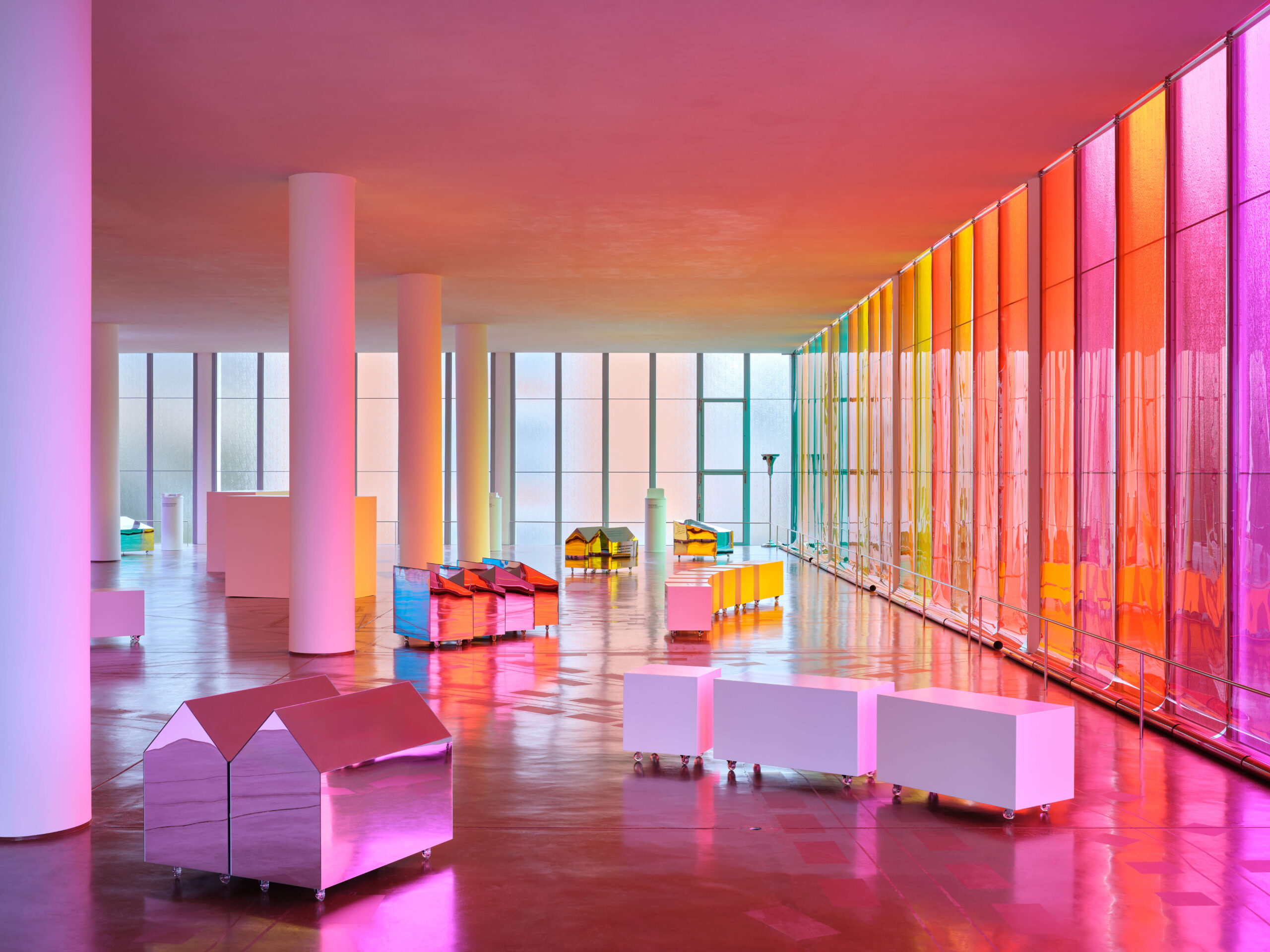
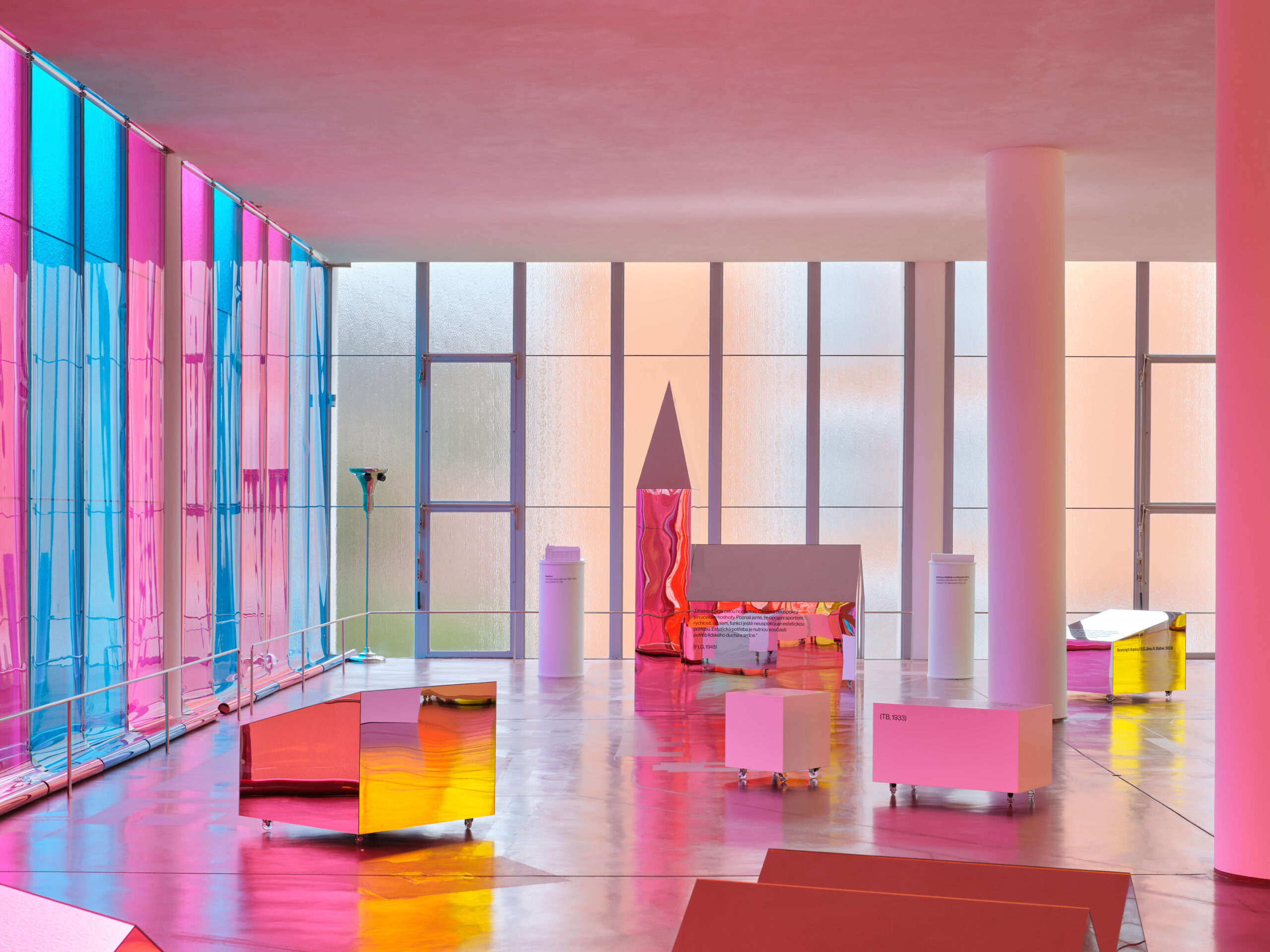
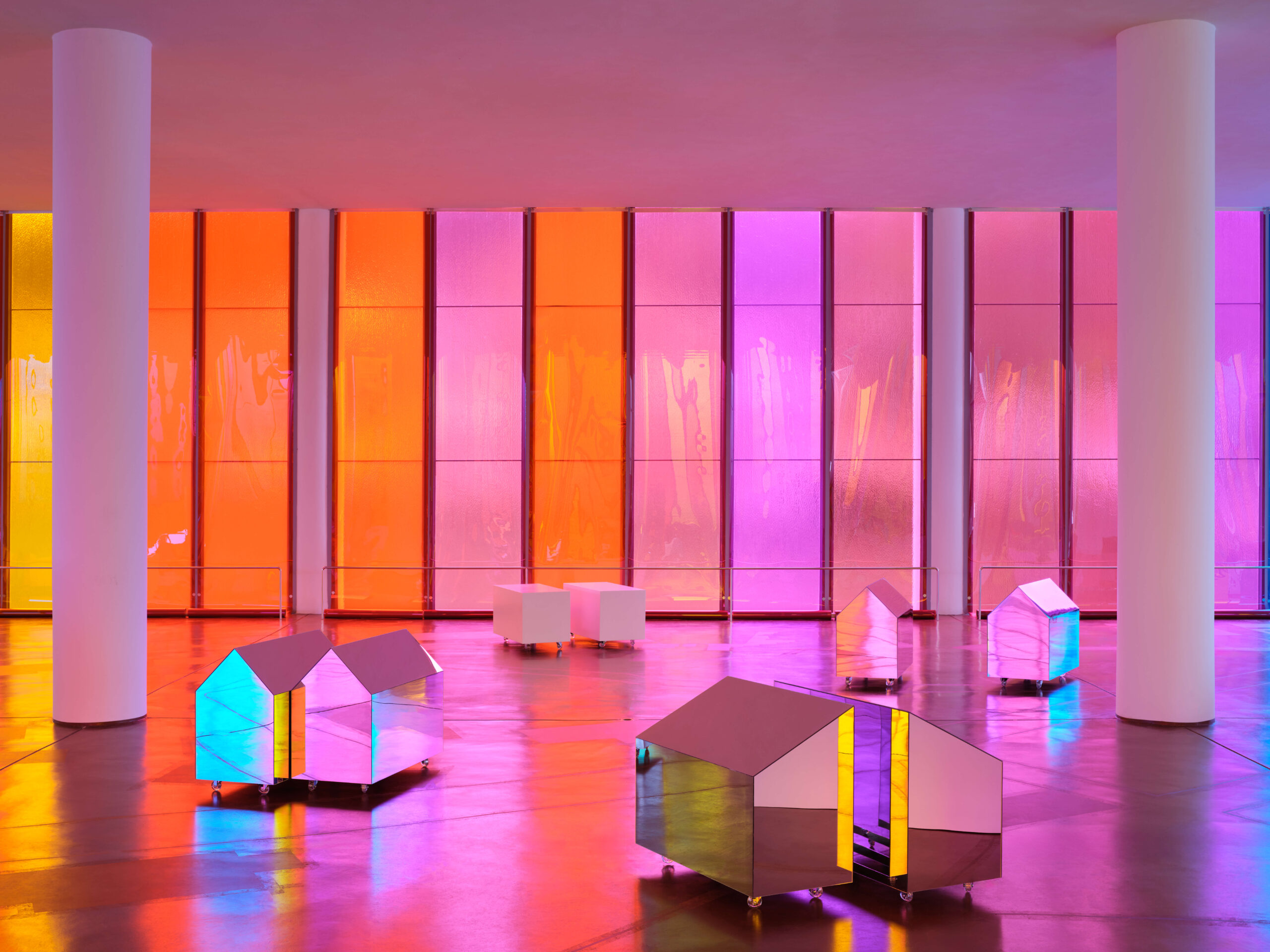
Light became the primary medium of the installation. Soft daylight filters into the interior through coloured films applied to the building’s glazed envelope, creating a layered lightscape that shifts throughout the day. In this way, we reference the artistic work of figures such as Olafur Eliasson, James Turrell, Dan Flavin, or Camilla Richter.

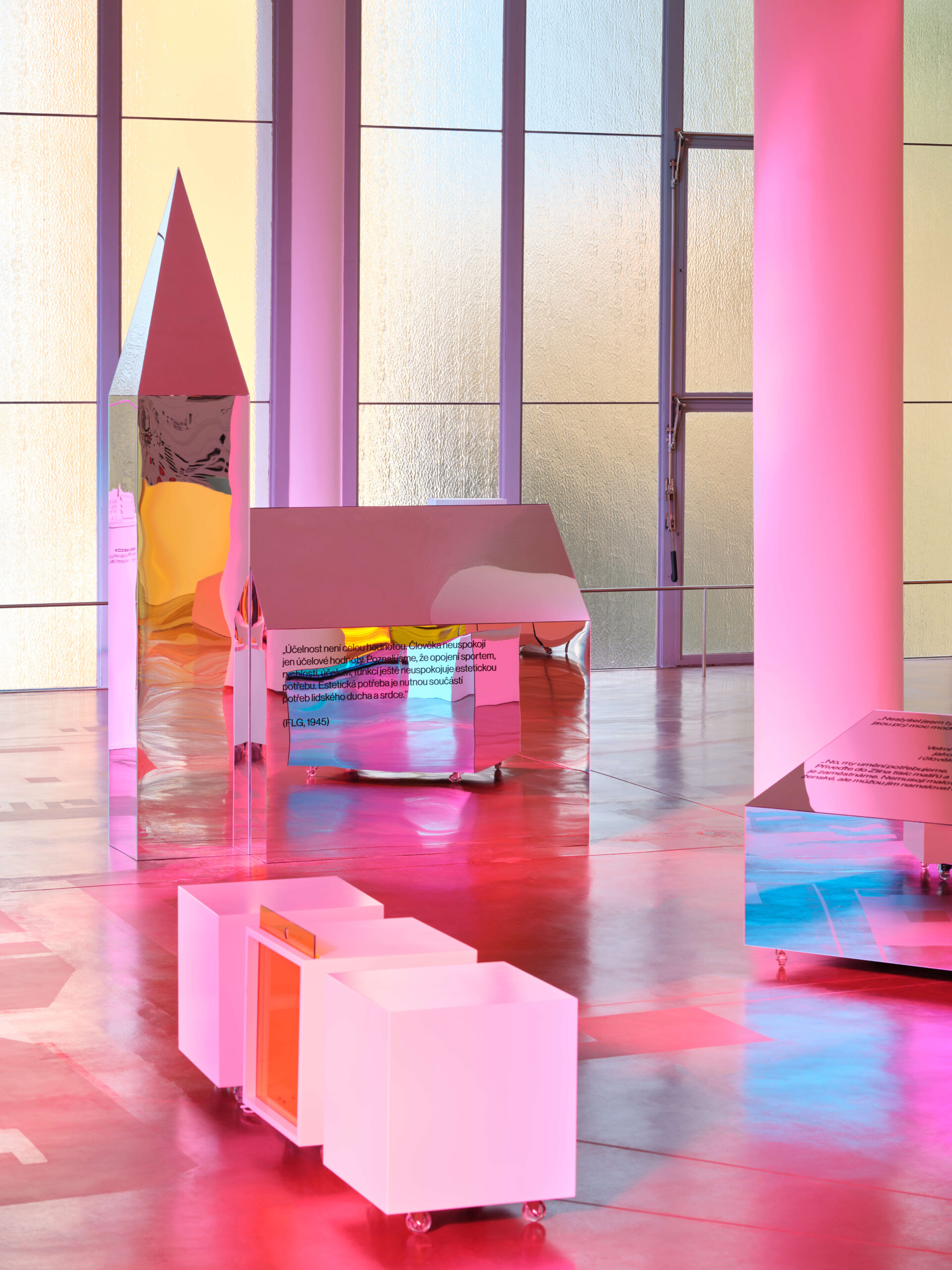
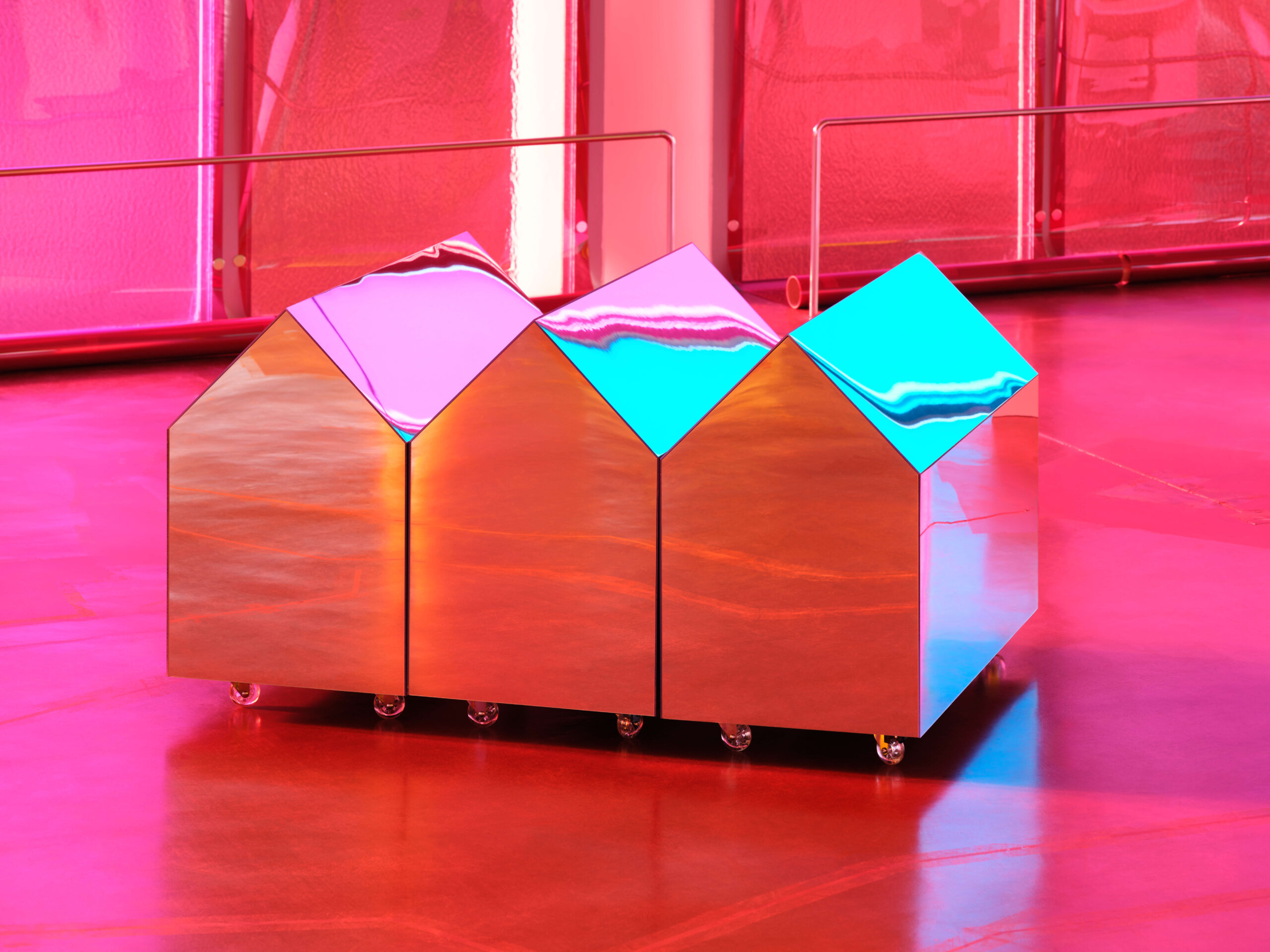
The space is populated by movable objects inspired by Zlín architecture. We reduced modernist structures such as factories, workers’ housing, and Bata houses into simple geometric forms, complementing them with elements of traditional rural architecture wrapped in a mirrored surface. The models reflect coloured light rays as well as realised architectural visions. Thanks to their wheels, visitors can freely compose their own spatial arrangements.
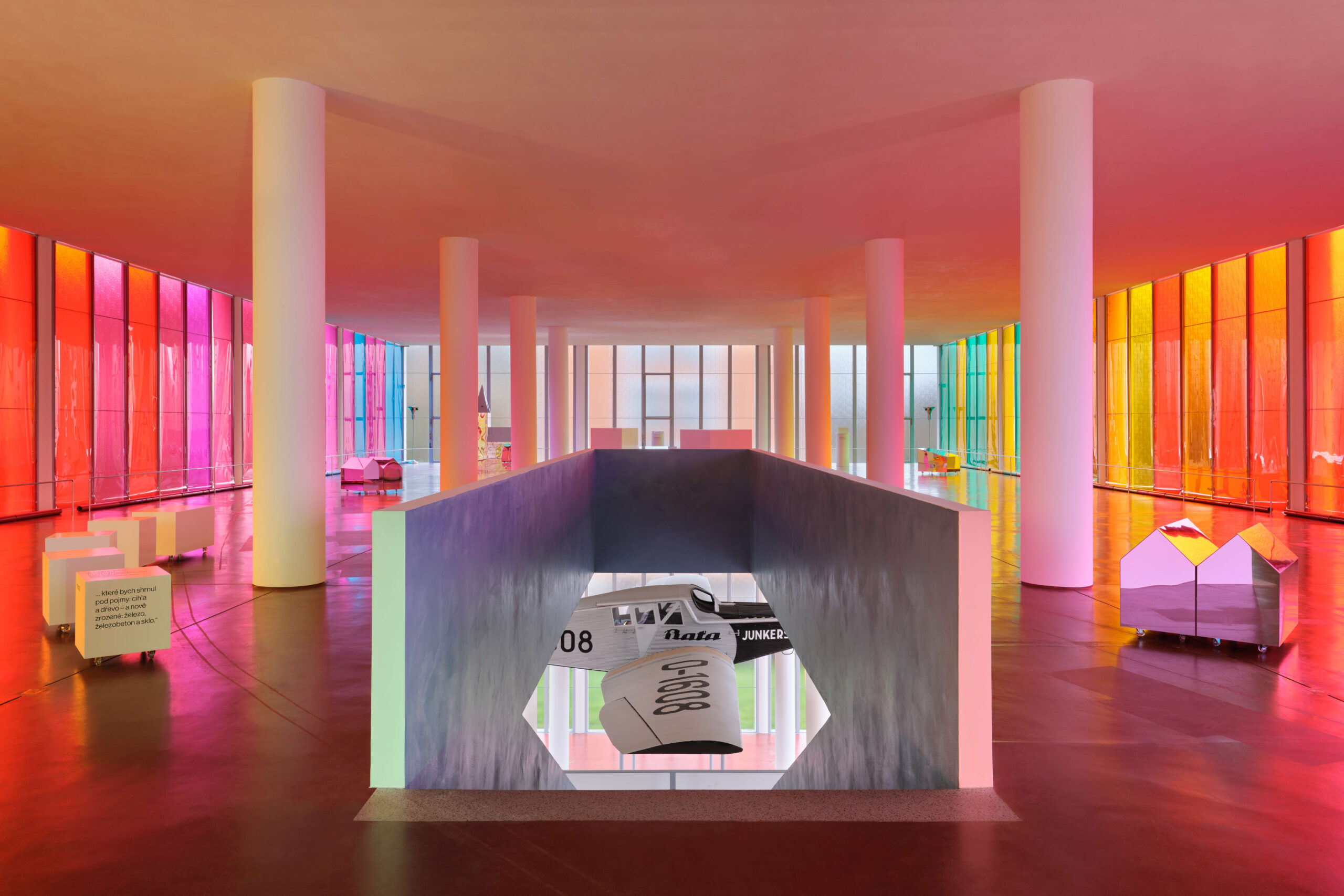
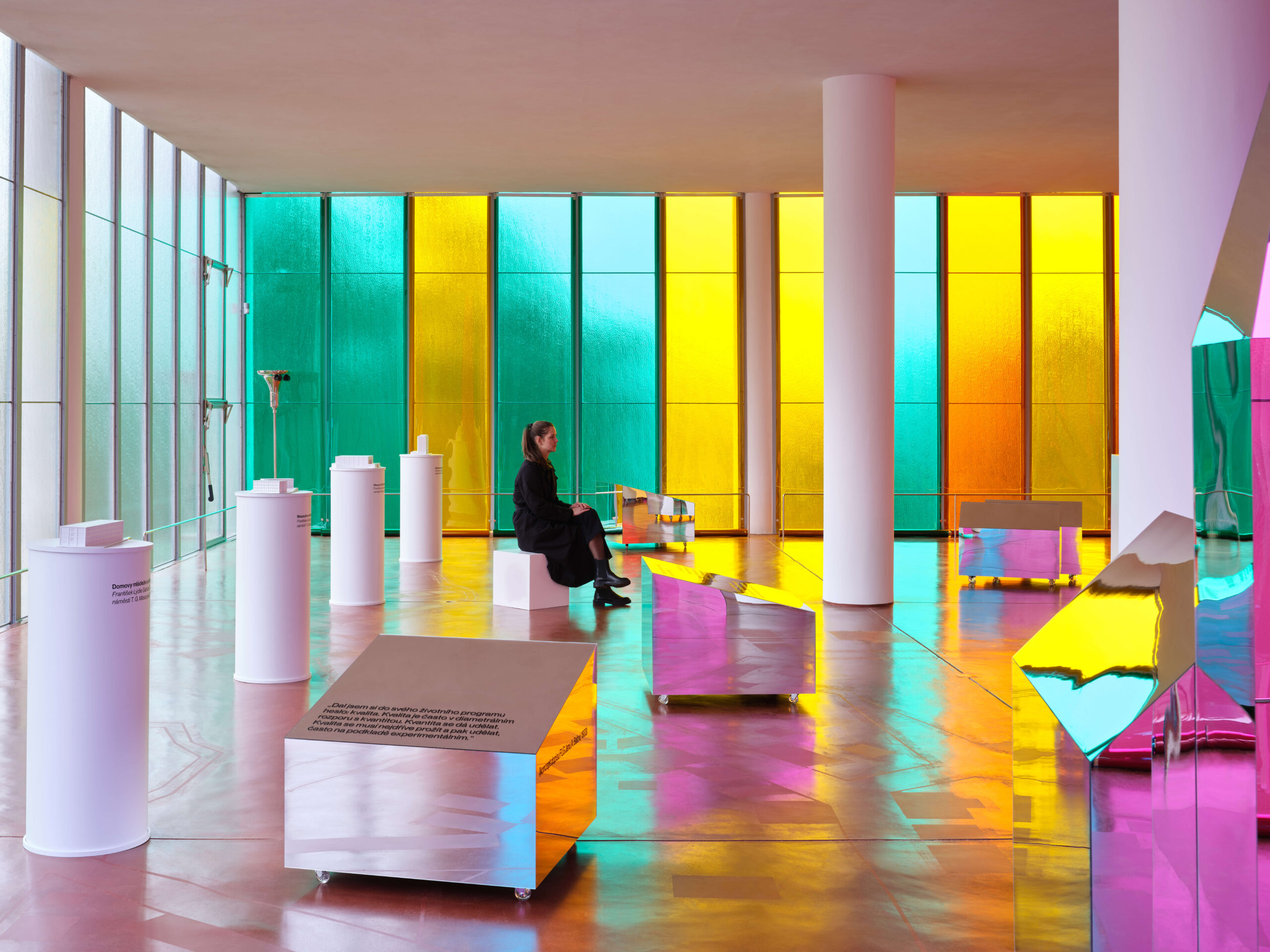
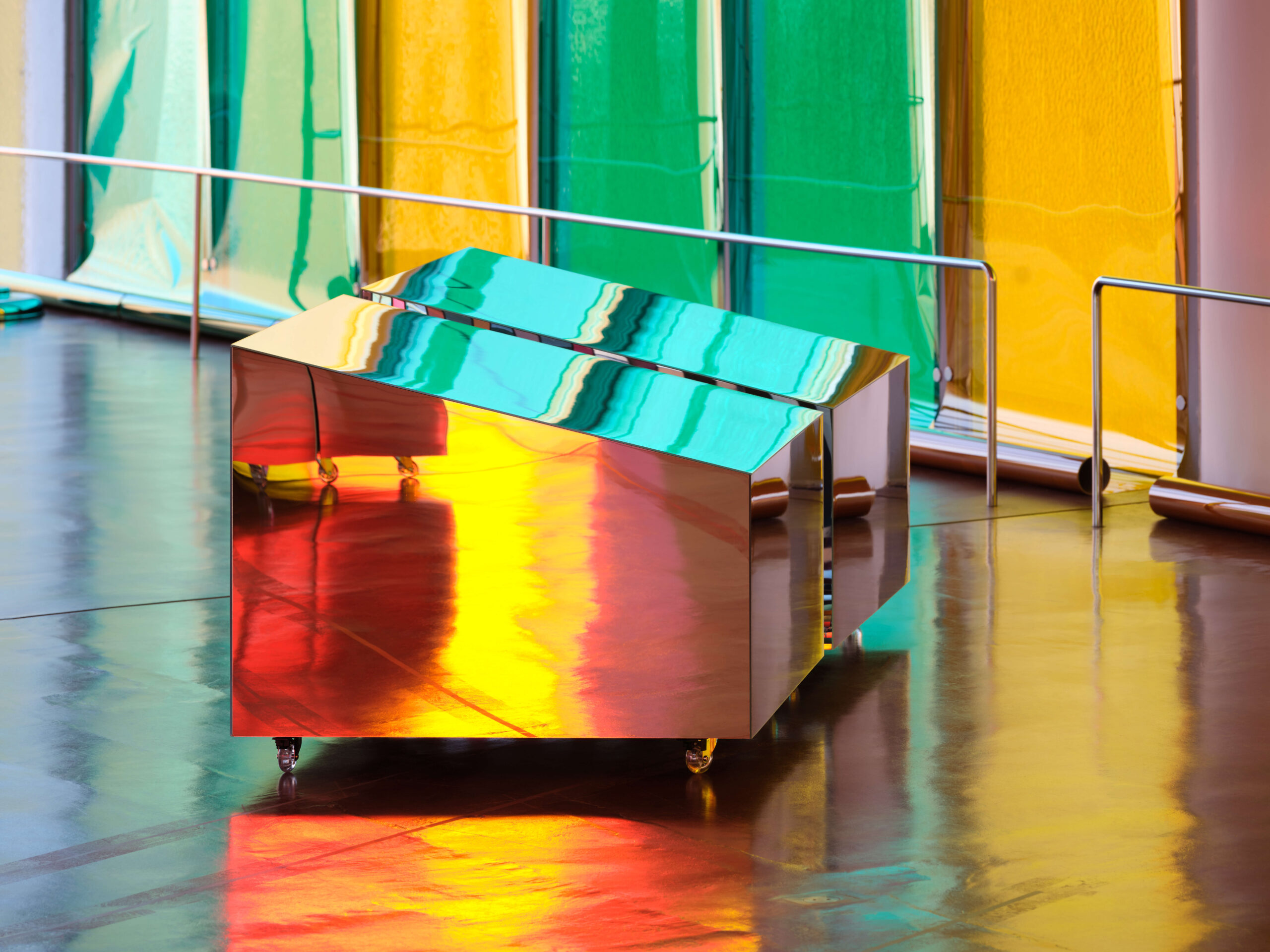
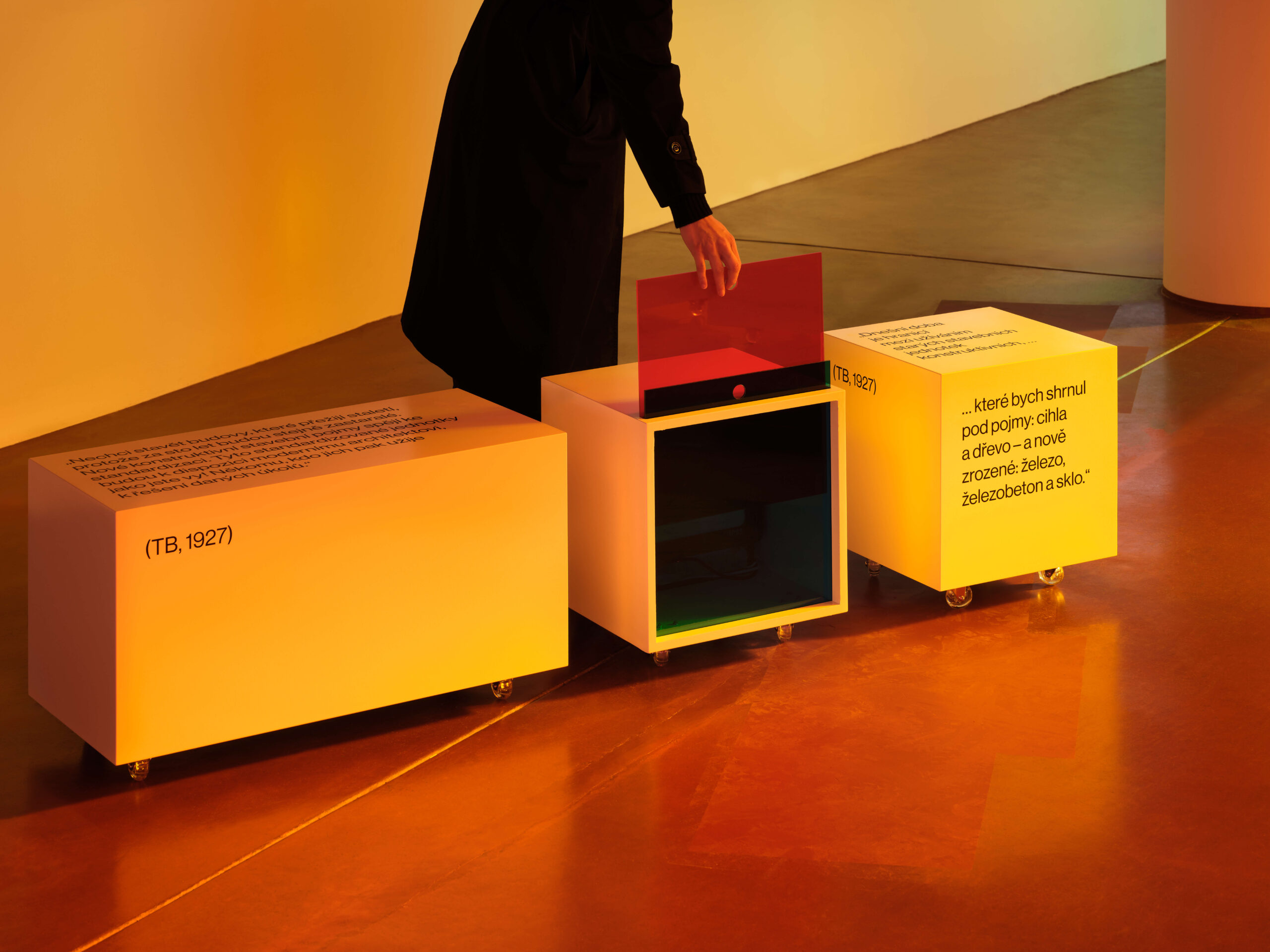
It was important for us not to oppose Gahura’s understanding of space, but to enter into a creative dialogue with it. Every member of our team – the art historian, aesthetician, architect, sculptor, and graphic designer – had a voice in that dialogue. Art historian Ondřej Horák also collaborated on the project. Together, the team searched for a form capable of conveying not only the final image of Zlín, but above all the process of its formation and the dialogue between Bata and Gahura.


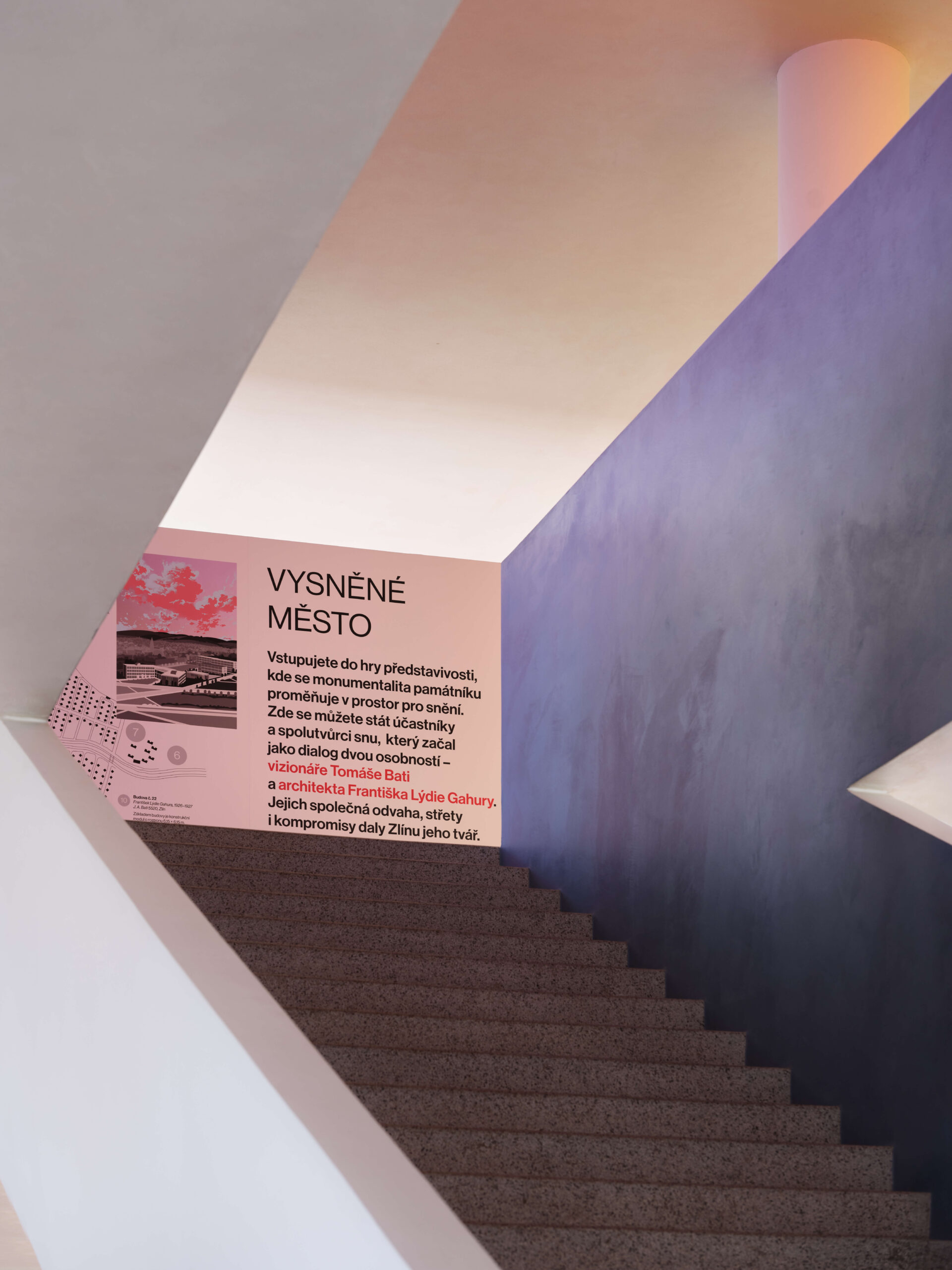
A large-format panel at the entrance introduces visitors to the broader context and depth of the collaboration between Bata and Gahura. Fragments of authentic dialogues appear throughout the installation, offering insight into their thinking and mutual understanding. The textual layer remains intentionally restrained, with the exhibition relying primarily on spatial and visual experience. Designed specifically for the memorial, the installation draws on the building’s unique qualities and offers a concentrated view of the period of Zlín’s greatest growth and its transformation into a modern city.